 Facebook
 X (Twitter)
 Reddit
 Pinterest
 Tumblr
 Delicious
 LinkedIn
 StumbleUpon



Frost and Protection for Sensitive Plants
Home » Fair Oaks Horticulture Center » Frost Protection
What is frost?
Frost is generally defined as any temperature 32° F or lower. For citrus, damage usually occurs at 30° F or lower depending on variety. Kumquats and Satsuma Mandarins have a high tolerance for frost, Lemons and Limes are less tolerant. For more information about sensitivity of various types of citrus, see the chart on page 2: Frost Protection for Citrus and Other Subtropicals.
Frost dates and chilling hours
Although the first average frost date for Sacramento is December 10 and extends until January 27, frosts and freezes can happen in Sacramento County any time between November and March. The earliest freeze on record (30 degrees) was on November 4, 1935 and the latest was March 27, 1898.
Frost dates in neighboring areas:
| Auburn: November 14 - April 13 | Nevada City: September 24 - June 4 |
| Davis: November 2 - April 18 | Placerville: October 22 - May 18 |
| Lodi: November 2 - March 31 | Woodland: November 5 - April 1 |
| Marysville: November 14 - March 16 |
Chilling hours for the Sacramento area average: 750 - 800 hours. These numbers are used when selecting fruit tree varieties that require a specific number of hours of chilling.
Before a frost
- Identify cold spots in your landscape by monitoring with thermometers.
- Identify plants at risk: citrus, succulents, tender perennials, tropical and subtropical plants.
- Have supplies ready: sheets, blankets or frost cloths, lights (old fashioned ones that get warm), wraps for trunks, thermometers, stakes or framework to hold covers off foliage.
Frost cloths come in different weights that can provide 4° to 8° of protection. Because the frost cloth allows some light and air to penetrate, it can stay on plants for a few days at a time. Frost cloth can lay directly on plant foliage.

PVC hoops to hold frost cloth
(click to enlarge) |
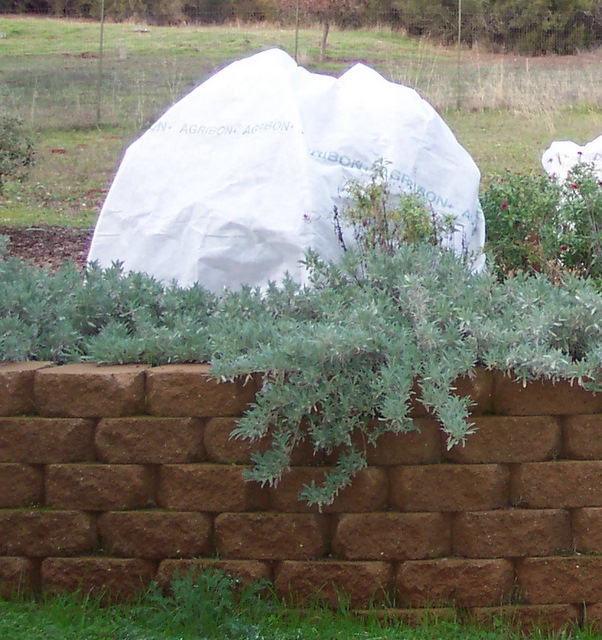
Frost cloth protects tree
(click to enlarge) |
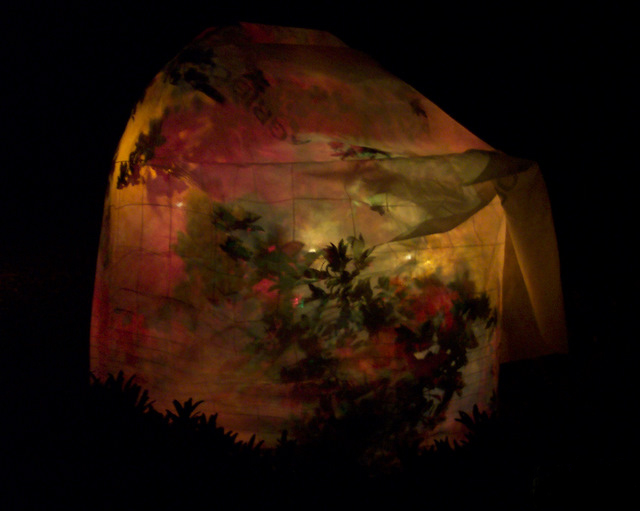
Lights on under frost cloth
(click to enlarge) |
- Prepare tender plants: avoid fertilizing and pruning after August to minimize tender new growth.
- Rake away mulch to allow soil to warm up during the day and radiate heat into the plant at night.
- Monitor weather forecasts and note how low temperatures will be and for how long.
- Local frost: clear, dry nights, usually temperature warms during the day
- Hard freeze: temperature inversion or Arctic front, can last for days or weeks, are very damaging
When a frost is forecast
- Move potted plants to a warmer spot next to the house or under a patio cover, especially on the south side.
- Check that plants are well watered because dry plants are more susceptible to damage, and moist soil retains heat better than dry soil.
- Cover plants before sunset to capture ground heat radiating upward at night. Remove sheets, blankets and other covers daily if it is sunny and above freezing to allow soil to absorb heat.
- Add heat by using outdoor lights: hang 100 watt drop lights or holiday string lights to interior of plant. Use the old C7 or C9 large bulbs, not new LED lights which do not give off heat. Old style holiday lights that give off heat can provide up to 4° of protection. Use lights, extension cords, and multi-outlets or power strips that are rated for outdoor use and are grounded (3-prong). Avoid connecting together more than three light strings in a line.
Read more from Farmer Fred about selecting lights for frost protection. - Wrap trunks of tender trees if a hard freeze is expected, using towels, blankets, rags, or pipe insulation.
- Harvest ripe citrus fruit. Generally both green and ripe fruit are damaged below 30°, but there is some variation by species (refer to chart in UC ANR Publication 8100, PDF, Frost Protection for Citrus and Other Subtropicals).
| 29°F | Limes |
| 26°F | Lemons and grapefruit |
| 22°F | Meyer lemon |
| 21°F | Oranges and mandarins |
| 19°F | Kumquat |
At the Fair Oaks Horticulture Center we use the following guidelines for protecting our citrus trees when temperatures are predicted to drop BELOW:
| 32°: | turn on the lights |
| 29°: | also cover young trees (1 to 4 years old) and older sensitive varieties such as limes and lemons |
| 27°: | also cover remaining trees |
| 26°: | add a layer of plastic sheeting over the frost cloth if a prolonged arctic freeze is expected |
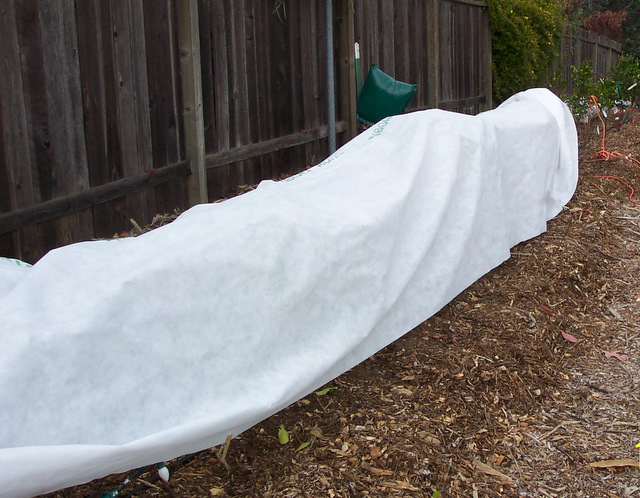
Frost cover on year-old citrus trees
(click to enlarge) |
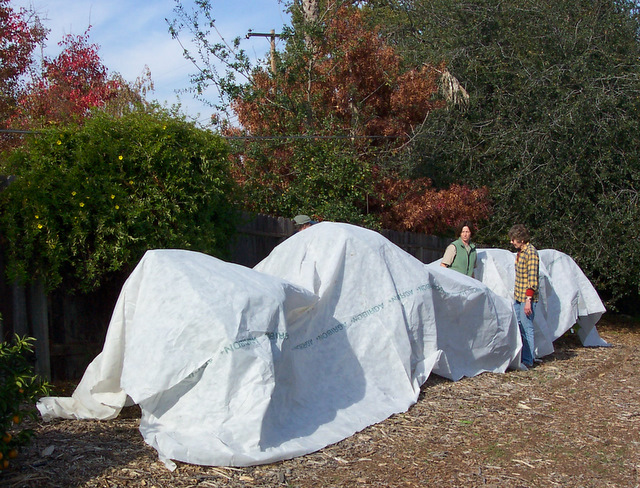
Frost cover on two-year-old citrus
(click to enlarge) |
After a frost
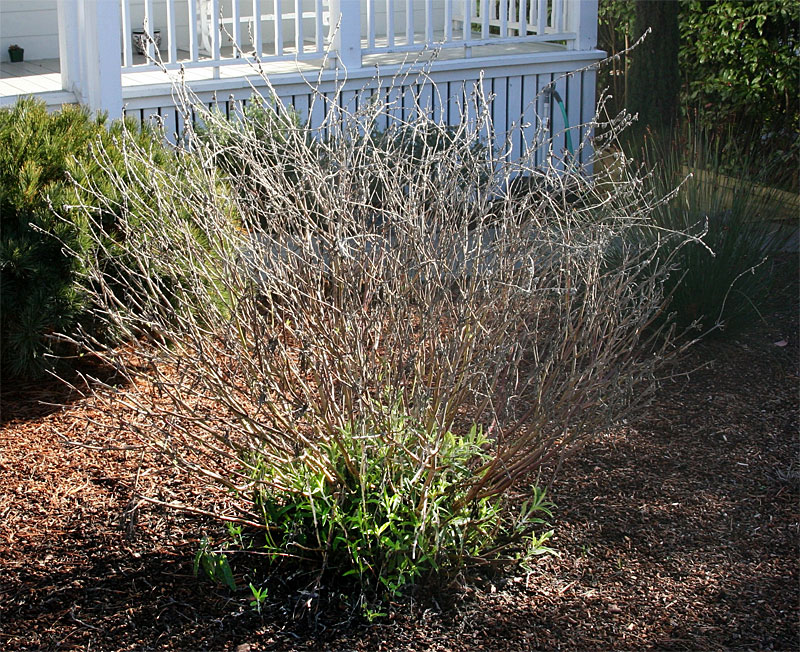
- Identify damage: dark brown or black leaves and twigs. Learn more about the difference between chilling injury and frost/freeze injury.
- Wait to prune out damage until after danger of frost has passed, and new growth begins in spring. Damaged leaves/branches help protect the plant crown and roots.

ice in bird baths.
(click to enlarge)
Written by Master Gardeners Caroline Hathaway and Cathy Coulter, November 2008