
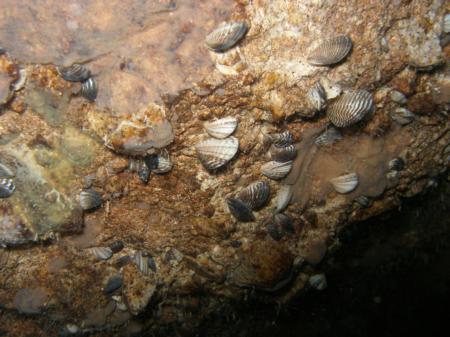
Two new invasive aquatic species pose a threat to the environment and water supply in California. The quagga mussel, Driessena bugensis, and zebra mussel, Driessena polymorpha, were detected in California water bodies in 2007 and 2008.
These species have great potential to cause ecological harm by modifying aquatic habitats. They reproduce rapidly and reache very high densities. Thus, they compete for space with native species, and because they filter phytoplankton out of huge volumes of water, they can change the physical and biological properties of the ecosystem.
They may also cause significant economic harm by clogging pipes and covering infrastructure from boat engines and docks to dam gates and irrigation channels.
More information
General Biology/Ecology/Distribution
Nationwide
· There is also a good overview at the web site of the 100
th Meridian Project, a collaboration of several government agencies working on stopping the nationwide spread of invasive species:
http://www.100thmeridian.org/zebras.asp
· The Pacific States Marine Fisheries Commission also has a good web site about aquatic invasive species, with a focus on the West coast:
http://www.aquaticnuisance.org/
Quagga/zebra mussels in California
· And for current news about Eurasian mussels and their impact on statewide water supplies, visit the California Department of Water Resources at
http://www.des.water.ca.gov/zmwatch/
You may find local information by contacting your water supplier.
Preventing the spread of Eurasian mussels
Inspections and Decontamination
One of the best ways to prevent the spread of quagga and zebra mussels is for boaters and other water users to inspect their vessels, trailers, and gear, and decontaminate them if anything suspect is found. Find information on how to inspect vessels and prevent spreading aquatic nuisance species at:
California Monitoring Information & Trainings
· To learn more about how your stream team, boating or fishing club, or lake/marina association can get involved in monitoring and helping to prevent the spread of quagga and zebra mussels, visit the UC Cooperative Extension/California Sea Grant Extension Program at
http://groups.ucanr.org/quagga/
Educational resources
Materials you can use to help educate members of your community about aquatic invasive species include
· And for education about the problems caused by releasing unwanted pets and plants, visit Habitatitude at http://www.habitattitude.net/