

- Author: Barbra Pushies
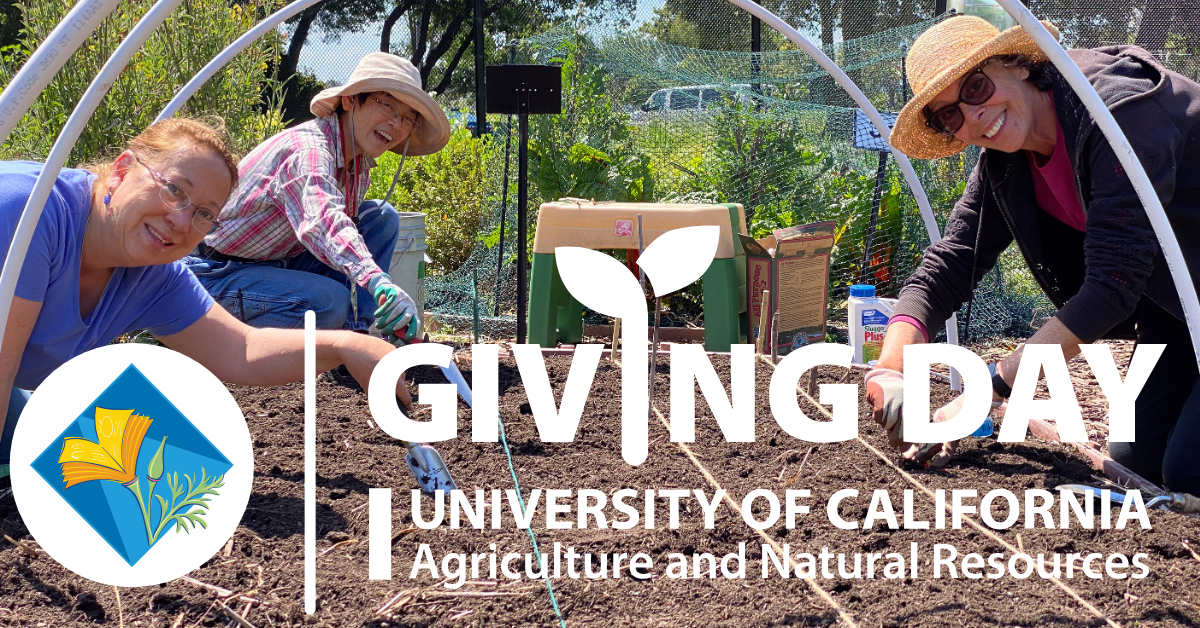
It's time to come together and support the UC Master Gardener Program's mission, so save the date! May 17-18, from noon to noon, is the UC Master Gardener Program statewide giving day, UC ANR Giving Day. This special event invites you to help support our mission of extending sustainable gardening practices to thousands of community, school, and demonstration gardens across California. By donating to the UC Master Gardener Program, you can help bring the knowledge and resources of the University to your local community.
Get ready to dig deep, spread the word, and make a difference!
As gardeners, we understand the importance of sustainable practices in nurturing green spaces and preserving the natural environment. You can see the impact of the UC Master Gardeners in the stories of our Gardeners With Heart. These stories show the many ways our volunteers help our communities by supporting food access, protecting pollinator habitats, connecting communities through gardening, supporting sustainable landscaping, and research-backed education. By supporting the UC Master Gardener Program, you contribute to the advancement of sustainable gardening practices throughout the state, fostering healthier gardens and communities.
UC ANR Giving Day offers various ways for you to show your support and get involved. Whether you are an avid gardener, a passionate environmentalist, or simply someone who recognizes the value of sustainable practices, we'd love you to join us in supporting our mission.
Make a Gift:
Visit donate.ucanr.edu/givingday during the 24-hour giving day on May 16-17 (noon to noon). Every donation, regardless of size, significantly impacts the UC Master Gardener Program's ability to continue its valuable work. Whether you contribute $5 or $500, your support helps fund educational resources, expand our outreach programs, and provides training opportunities.
Help Spread the Word:
Mark your calendar and spread the word about UC ANR Giving Day! Share the event details with your friends, family, and fellow gardening enthusiasts. Encourage them to join you in supporting this important cause. Together, we can create a ripple effect of positive change by raising awareness and inspiring others to get involved.
Engage on Social Media:
On May 16-17, be part of the excitement by joining in the conversation on social media. Use the hashtag #GivingDay to share your support for UC ANR Giving Day. Let your online community know why sustainable gardening is important to you. Together, we can amplify our message and inspire others to take action.
UC ANR Giving Day is an opportunity to unleash the power of giving and support sustainable gardening practices across California. By supporting the UC Master Gardener Program and UC ANR, you contribute to the extension of knowledge and resources to communities across California. Remember to mark your calendar for May 16-17, and join in the celebration of sustainable gardening.
Let's dig deep, donate, spread the word, and make a lasting impact together!
To make a gift and learn more about UC ANR Giving Day, visit donate.ucanr.edu/givingday.
- Author: Barbra Pushies
We are excited to announce the winners of the 2024 "Community in Bloom" Photo Contest! This year, we received an outpouring of incredible entries that captured community, creativity, and the spirit of the UC Master Gardener Program. A heartfelt thank you to each participant who shared their talent and to everyone who voted.
The winners are …

First Place: Gary Bednorz, Ventura County
Gary's entry, titled “Blessed Beginning,” captures the poignant Native American white sage smudging ceremony of Roanna Prell, marking the start of a trainee project to create a Chumash Sacred Garden.
Second Place: My Thanh Kim, San Diego
With My Thanh's photo, “Together We Can Move Mountains (of Mulch)!” My Thanh highlights the joy of gardening throw the lens of children. The image is filled with fun, energy, and teamwork.
Third Place: Nick Hernandez, Tulare
Nick's photo “Fresh out of the Ground!” showcases the literal fruits of labor—a vibrant photo of a freshly harvested carrot being enjoyed by straight from the garden.
Thank you once again to our entire UC Master Gardener community. Your passion, support, and volunteer work are the heart of our mission, bringing to life the beauty and impact of what we accomplish together.
To view all of the photo contest submissions visit: View Photo Submissions
- Author: Barbra Pushies

May is here, and the summer heat is just around the corner. There is so much happening in our gardens this month. Here is a list of things to do in May.
- Plant Vegetables: Plant warm-season vegetables and consider succession planting every two weeks for extended harvests.
- Prevent Spider Mites: Take preventative measures such as adequate irrigation, daily misting of leaf undersides, reducing dustiness, and using horticultural oil sprays.
- Fertilize Fruit Trees: Fruit trees are actively growing, so fertilize them accordingly, following directions and safety precautions provided with the fertilizer you choose.
- Prune Roses: Prune spent blooms weekly down to the first five-part leaf or slightly further for shaping. Lightly feed and water afterward.
- Prune Sub-Tropical and Deciduous Fruit Trees: May is ideal for pruning trees like ficus, coral tree, avocado, citrus, etc. Avoid pruning sub-tropical trees in winter.
- Plant Perennials: May is a great time to plant perennials; keep them well-watered as summer approaches.
- Fertilize Dahlias: Regularly fertilize dahlias with a low nitrogen, high phosphorus organic fertilizer like fish bone meal throughout their growing and blooming period.
- Turn on Automatic Timers: Now that the rainy season is over ensure your automatic timers are turned back on for watering. Water deeply and less frequently rather than with light, daily sprinkles
- Check Drip System: Regularly check drip systems for clogs, leaks, and broken parts to ensure efficient watering.
- Monitor for Pests: Visually survey plants weekly for pests and take action early to prevent high populations that are difficult to control.
- Refresh Mulch: Maintain soil moisture by refreshing mulch around plants.
- Weed Control: Remove weeds to reduce competition for water with your plants.
With this May garden checklist, you're well-equipped to embrace the season's abundance and nurture a thriving garden.
Ask your local UC Master Gardener Program.
Have a gardening question? UC Master Gardener volunteers are available to help. Click here to Find a Program and connect with your local UC Master Gardener Program. You will be redirected to your local county website and contact information. UC Master Gardener volunteers are available to help answer questions for FREE. Happy gardening!
- Author: Barbra Pushies
Watch video on YouTube here: https://youtu.be/4W_CYgEmNF8
As we bring National Volunteer Month to a close, we are honored to highlight a group of outstanding UC Master Gardener volunteers who have been nominated for their work in promoting diversity, equity, and inclusion (DEI) within their communities. These UC Master Gardeners have demonstrated a dedication to creating a more inclusive environment in gardening and volunteerism. Join us as we celebrate these inspiring Gardeners with Heart for their invaluable contributions to fostering diversity and equity in gardening and beyond.
Kathy Kaplan, a UC Master Gardener of Santa Clara County, embodies the spirit of inclusivity and effective volunteer leadership. She cultivates a welcoming and inclusive atmosphere, ensuring everyone feels heard and valued. Kathy created and helps run “The One World Kitchen Garden” at the Martial Cottle Park Demonstration Garden. The “One World Kitchen Garden” demonstrates growing edible plants embraced by the many cultures represented across Santa Clara County, showcasing the rich diversity in our local communities. To promote inclusion in the program, Kathy intentionally plans two weekly demo garden workdays, one during the week and one on weekends, to accommodate MGs with different employment statuses and schedules.
Linda Mansell, Julie Avis, Guma, Kim Jacobs, and Rudolfo Milito form a dynamic team within the UC Master Gardener Program of Sonoma County that supports its DEI efforts. This team's extensive work translating resources into Spanish has expanded access to gardening knowledge and resources for Spanish-speaking communities across California. Each month, the team translates its gardening advice column in the Press Democrat for use in the Spanish column, La Prensa, offering seasonally relevant advice on sustainable gardening and increasing awareness of the program and resources throughout Sonoma County. The county's Spanish website features links to videos they have produced in Spanish on multiple gardening topics. The team translated video scripts from English and reviewed them for cultural appropriateness. The team volunteers at events in the Latino community, distributes documents in Spanish, and answers questions. All of the UC Master Gardener projects in Sonoma County and across California benefit from the contributions of the Spanish translation team!
Debbie Spurling, a UC Master Gardener of Sutter-Yuba, has demonstrated dedication to promoting diversity and inclusion within her local program. As project leader for the UC Master Gardener training program, Debbie worked alongside several counties to determine best practices for volunteer recruitment. She ensured those elements were used in the volunteer advertising and interviewing process. Debbie also spearheaded a new mentorship program in the county to improve retention of new volunteers. This program was inspired by her own class graduating and experiencing a feeling of not being included in the larger population. She vowed that this would not be something other trainees would feel moving forward. At every step of developing and running the mentorship program, Debbie has worked to ensure that decisions were made through the diversity and inclusion lens, including in choosing a diverse selection of speakers. The mentorship program has gotten rave reviews from new UC Master Gardeners who say they have felt more included and welcomed.
We are immensely grateful for the dedication, passion, and hard work that Kathy Kaplan, Linda Mansell, Julie Avis, Guma, Kim Jacobs, Rudolfo Milito, and Debbie Spurling have demonstrated in promoting diversity, equity, and inclusion within the UC Master Gardener community. Their collective efforts have enriched the lives of individuals and families, fostering a more inclusive and equitable environment for all. As we celebrate National Volunteer Month, let us extend our heartfelt appreciation to these Gardeners with Heart for their invaluable service and commitment to creating a more diverse and inclusive world.
About National Volunteer Month and Gardeners with Heart
During National Volunteer Month (April 1 - 30), the UC Master Gardener Program celebrates its incredible volunteers and their contributions to California communities. Gardeners with Heart were identified by local county leadership as diversity, equity, and inclusion leaders because of their commitment to building connections with community-based organizations and underrepresented communities. Join us in honoring their dedication and passion for making a difference in the lives of others. If you would like to get involved and learn more about gardening in your community, you can find your local program here.


- Author: Barbra Pushies
Watch the video on YouTube here
As we continue our celebrations of National Volunteer Month, we're excited to spotlight a remarkable group of UC Master Gardeners dedicated to nurturing vibrant habitat gardens, promoting biodiversity, and advocating for sustainable landscaping practices. These exceptional UC Master Gardeners have transformed not only gardens but also mindsets, fostering a deeper appreciation for native plants and pollinators within their community. Join us as we celebrate and express our gratitude to these outstanding "Sustainable Landscape Stewards" for their unwavering commitment to enhancing urban biodiversity and promoting environmental stewardship.
Sam Foushee, Sally Hughes, and Jennifer Cardoza, tackled the challenge of revitalizing a plot near the vegetable trials garden at the Lake Merrit Trial Garden in Alameda County into a sanctuary for native bees. Their dedication and vision have created an oasis of biodiversity focused on plants that attract, shelter and feed native bees. The garden has expanded multiple times including preserving and protecting species of native plants to promote biodiversity. This project has inspired others and helped UC Master Gardeners build a deeper understanding of planting for pollinators and overall biodiversity that they have been able to share within their communities.
Birgitt Evans, helped the Lake Merrit Trial Garden grow and expanded its efforts by focusing on creating habitat areas tailored to the needs of butterflies. Her contributions have been instrumental in supporting monarch butterflies and fostering habitats for a diverse range of butterfly species, aiding in the conservation of these vital pollinators.
Jane Margold has taken the Lake Merrit Trial Garden Project to the next stage leading a citizen science project that monitors which plants attract which types of native bees and other pollinators. When completed, this information will be available to inform local native plant gardeners in making plant selection decisions to promote pollinators in Alameda County's microclimate.
Lindy Kauffman, an exceptional leader, spearheaded the establishment of educational sustainable gardens across Mariposa County. Lindy has overseen the design and installation of gardens showcasing swales to control water, sustainable mulching methods, and the use of climate-adapted plants. These gardens serve as educational resources for volunteers and the community alike. Lindy organized a cohort of UC Master Gardeners and AmeriCorps volunteers and collaborated with county, Chamber of Commerce, and other volunteer organizations to design and install a sustainable landscaping garden with more than 100 locally adapted plants.
Ann Northrup, leverages her background in plant pathology and has been integral to the success of Santa Clara County's online Plant Clinic. Her expertise and dedication to serving home gardeners has provided invaluable support, especially during the transition to virtual clinics amid the challenges posed by the COVID-19 pandemic. Through her commitment, the online Plant Clinic continues to thrive, reaching and benefiting an ever-expanding number of participants.
As we celebrate National Volunteer Month, let us extend our heartfelt appreciation to Sam Foushee, Sally Hughes, Jennifer Cardoza, Birgitt Evans, Lindy Kauffman, and Ann Northrup. Their tireless efforts and passion for sustainability have enriched our landscapes and inspired others to join in the collective endeavor to preserve and protect California's natural resources.
About National Volunteer Month and Sustainable Landscape Stewards
During National Volunteer Month (April 1 - 30), the UC Master Gardener Program celebrates the extraordinary contributions of its volunteers to promoting sustainable landscaping practices and biodiversity conservation. Sustainable Landscape Stewards volunteers were nominated for their outstanding work in creating and maintaining habitat gardens, fostering urban biodiversity, and promoting environmental stewardship. Join us in honoring their dedication and passion for making a positive impact on the environment and the community at large. If you would like to get involved and learn more about sustainable landscaping practices in your community, you can find your local program here