
- Author: Cheryl Reynolds
Are you in need of some last-minute CEUs for 2022? We're pleased to announce that a new online course on runoff and surface water protection is available and offered for free. If you are a pest management professional working primarily in structural pest control or landscape maintenance, then this course is for you! Developed by pest management experts from the California Department of Pesticide Regulation and the University of California, this course presents information on the Surface Water Protection Regulations that are found in Title 3 of the California Code of Regulations sections 6970 and 6972. These regulations were put into place to prevent pesticide runoff into California waterways and to reduce surface water contamination from pyrethroid insecticide use. In this course, you'll learn about the types of pesticide applications that are allowed under the regulations as well as application types that are prohibited and also application types that are exempt. The course takes a close look at pyrethroids, particularly bifenthrin because of its high use in urban areas, high detection in surface waters, and high toxicity to aquatic organisms. Fipronil, another commonly used ingredient in structural and landscape products, is addressed in the course as well because it has similar water-quality concerns as the pyrethroids. Specific label restrictions of bifenthrin and fipronil products in California are also discussed. The Urban Pyrethroid and Fipronil Use: Runoff and Surface Water Protection course has been approved by DPR for a total of 1.5 continuing education units (CEUs), including 0.5 hour of Pesticide Laws and Regulations and 1.0 hour of Other and by the Structural Pest Control Board (SPCB) for 1.5 hours of Rules and Regulations.
UC IPM currently offers 22 other online courses with Continuing Education Units from DPR. Many of our courses are also credited by the California Structural Pest Control Board (SPCB), Certified Crop Adviser (CCA), the Western Chapter of the International Society of Arboriculture (WCISA), and the Arizona Department of Agriculture.
In addition to our newest course, this year we are offering two other courses with CEUs for free – Air Blast Sprayer Calibration and Providing IPM Services in Schools and Child Care Settings.
Don't forget that if you are a license or certificate holder with the California Department of Pesticide Regulation (DPR) and your last name begins with the letters A through L, then this is your year to renew. DPR encourages all license holders to send in renewals as soon as possible.
If you have specific questions about renewal with DPR, please check out their new Licensing Renewal Information page.
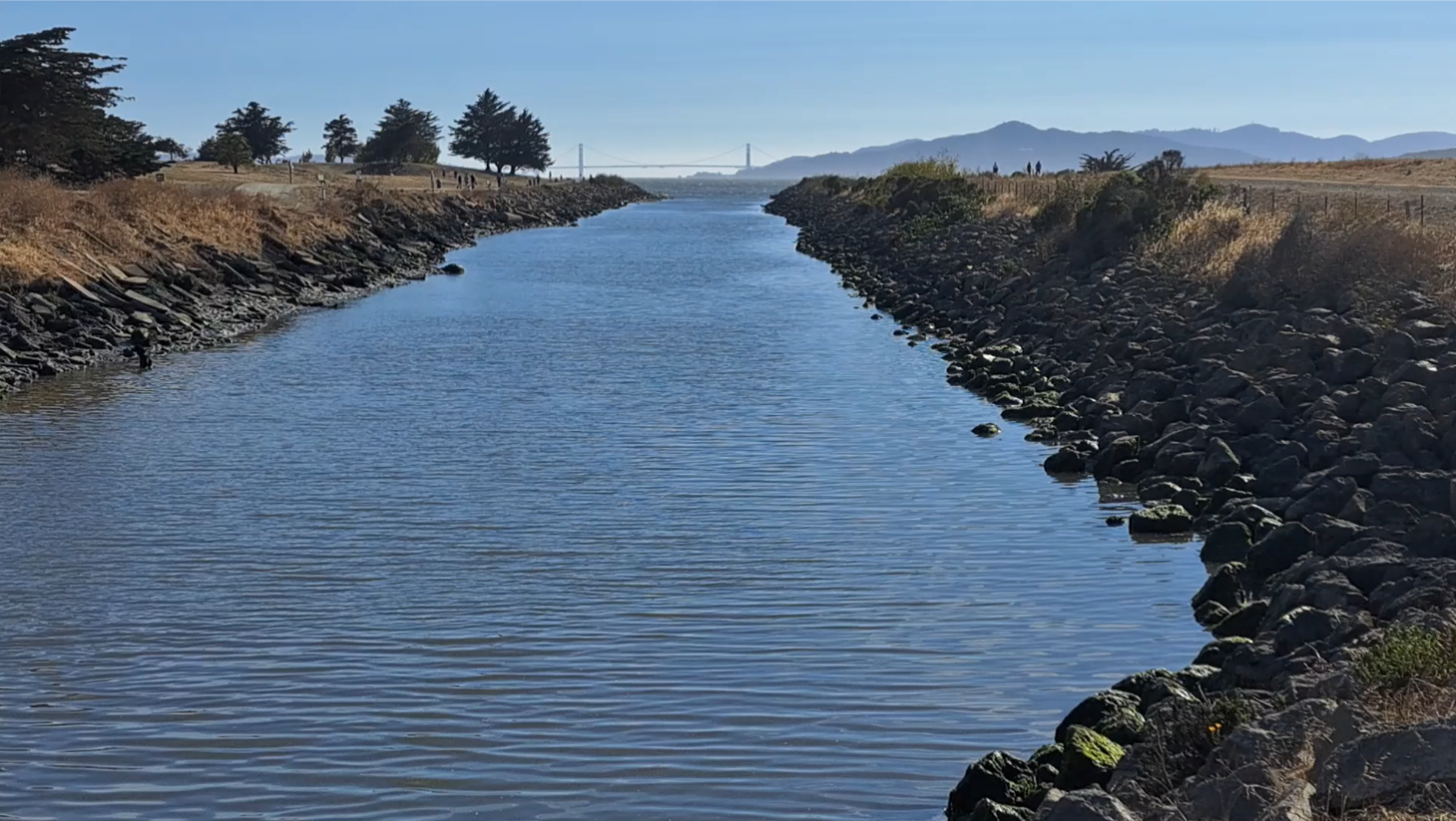
Do you have general questions about our online courses and DPR and SPCB CEUs and want them answered live?
Join us on Zoom December 6. Drop in anytime between 3 and 4 pm.
Join Zoom Meeting
https://ucanr.zoom.us/j/98437300331?pwd=R0s4NklJZjBpeU5neVlva2lYV3Y2Zz09
Time: Pacific Time (US and Canada)
Dec 6, 2022 03:00 PM
Meeting ID: 984 3730 0331
Passcode: 532183
One tap mobile
+16699006833,,98437300331# US (San Jose)
+16694449171,,98437300331# US
- Author: Petr Kosina
A brand-new online course on Diagnosing Herbicide Injury focusing on how an herbicide injury situation can arise, what information can help diagnose symptoms during field investigations, and what tools are available to you, is now available from the UC Statewide Integrated Pest Management program (UC IPM).
When unexplained damage is noticed on a crop or other non-weed plant, herbicides are often a primary suspect. That is no surprise because herbicides are very powerful and effective tools used to control weedy plants in a wide variety of locations. However, symptoms of many other plant stresses, such as diseases and nutrient deficiencies or toxicities, can closely resemble the injury symptoms caused by herbicides. Economic implications of herbicide damage can vary–in some cases visible injury may have very little direct economic effect while in others, even slight herbicide symptoms can affect the marketability of affected plants. In addition, the presence of an unregistered herbicide on non-target crops can result in illegal residues which could have both safety and legal consequences.
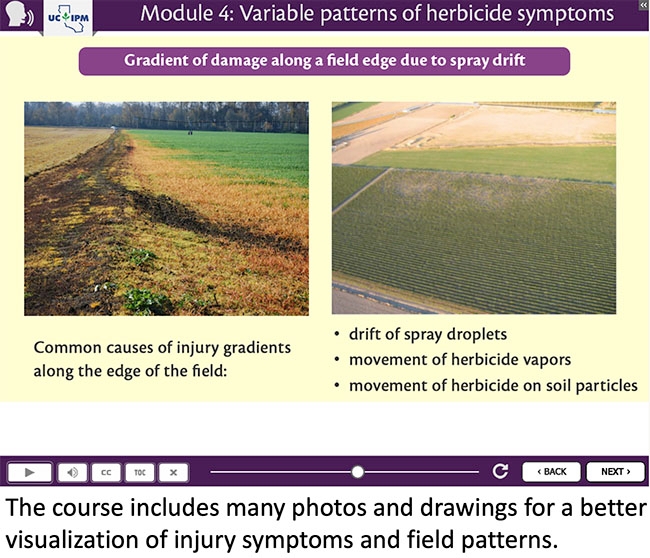
The new online course was developed by Dr. Brad Hanson and Dr. Kassim Al-Khatib from the Department of Plant Sciences at UC Davis, and UC IPM instructional designers. If you are a grower, pest control adviser, or pesticide applicator, then this course is a great opportunity to learn about how to approach crop injury investigation when herbicide is suspected cause. You will learn how herbicides injure plants, how long herbicide symptoms may last and factors that may influence the time that herbicide injury symptoms are visible, possible scenarios of herbicide exposure based on uniform and variable injury patterns observed in the field, how to prepare samples for the laboratory analysis and more.
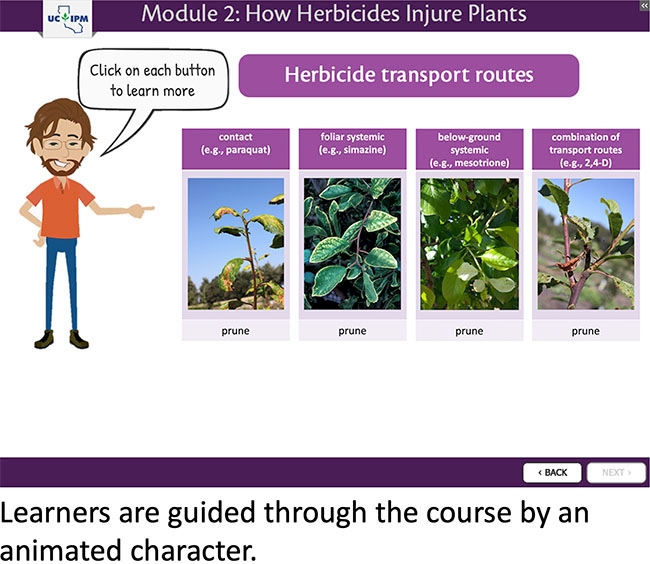
The course content is free to anyone who wishes to view it. For those requiring a certificate of completion and continuing education units (CEUs), the regular cost is $30, but we are offering a reduced price of $15 through October 31, 2021. Diagnosing Herbicide Injury course has been approved by the California Department of Pesticide Regulation (DPR) for 1.5 continuing education units (CEU) of Other, Certified Crop Advisor (CCA) for 1.5 units (IPM), and the Arizona Department of Agriculture for 1.0 Credit.
If you are a DPR license or certificate holder with a last name beginning with letters M through Z, then this will be your year to renew. Now is a good time to check out the other UC IPM online training courses offered. All are 50% off the regular price through October 31st. DPR strongly suggests returning renewal packets back to them by October so that your license or certificate can be renewed before it expires. Many of our courses are accredited by DPR for continuing education hours and also by the California Structural Pest Control Board (SPCB), Certified Crop Advisor (CCA), the Western Chapter of the International Society of Arboriculture (WCISA), and the Arizona Department of Agriculture.