ANR BLOG FEED
Coming Soon to Your Next Memorial Day Picnic -- Insects as Food and not Pests?
"Insects provide food at low environmental cost, contribute positively to livelihoods, and play a fundamental role in nature."
Insects form part of the traditional diets of at least 2 billion people according to a recent report by the UN Food and Agriculture Organization: Edible Insects, Future prospects for food and feed security. http://www.fao.org/docrep/018/i3253e/i3253e.pdf
Over 1,900 species have reportedly been used as food. The most commonly consumed insects are beetles (Coleoptera) (31 percent), caterpillars (Lepidoptera) (18 percent) and bees, wasps and ants (Hymenoptera) (14 percent).
Highlights from the report:
- Insects are a highly nutritious and healthy food source with high fat, protein, vitamin, fibre and mineral content.
- The environmental benefits of rearing insects for food and feed are founded on the high feed conversion efficiency of insects. Crickets, for example, require only 2 kilograms of feed for every 1 kilogram of bodyweight gain.
- Because of their nutritional composition, accessibility, simple rearing techniques and quick growth rates, insects can offer a cheap and efficient opportunity to counter nutritional insecurity by providing emergency food and by improving livelihoods and the quality of traditional diets among vulnerable people.
- Insects offer a significant opportunity to merge traditional knowledge and modern science in both developed and developing countries.
"Insect rearing for food and feed remains a sector in its infancy, and key future challenges will likely emerge as the field evolves. As such, readers are encouraged to contact the authors with feedback on this book. Such contributions will undoubtedly assist the future development of the sector."
While it's unlikely many of us in the US will be dining on insects during this year's Memorial Day picnics, maybe someday soon those pesky ants will be forming the basis of grandma's famous potato salad.
Edible Insects
Sierra forests need to burn more often
Many parts of the Sierra Nevada have not burned in more than 100 years, a significant departure from a natural fire cycle that would characterize a healthy forest, according to Susie Kocher, UC Cooperative Extension advisor in the Central Sierra...
Rare plant shows again at HREC
The critically imperiled plant called Beaked Tracyina (Tracyina rostrata) is only known from about 16 locations found in Humboldt, Lake, Mendocino, Sonoma, and Trinity counties. Four of those sites are located on the UC Hopland Research & Extension Center. The CA Rare Plant Ranking for Tracyina is 1B.2 - meaning that it is rare, threatened, or endangered in CA and elsewhere, and is fairly endangered in California. Well, in this case it is also endemic to California.
This plant has a history of "disappearing" from local known sites ... or at least plants cannot be found in subsequent years after discovery. The plant can grow to 30 cm in height, but recent years' monitoring of one location at HREC has shown that the population persists at one location each year, but the size and number of plants may be dwarfed in dry springs.
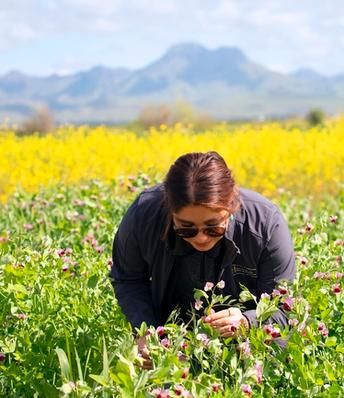
This year, due to the fact that HREC has had only about 5 inches of precipitation since January 1, the Tracyina plants are extremely small, and very easily missed. You can see in the photos that the plants are only about 3 to 4 cm in height. It is literally like finding a "needle in a haystake" since, this year, the plants are only about the size of needles.
Bodega Marine Lab keeps watch on ocean temperatures
Ocean waters are warming, sea level is rising, seawater is becoming more acidic, and shoreline erosion is intensifying. The world’s oceans are reacting to increased carbon dioxide and other greenhouse gases in the earth’s...

John Largier along the northern California coast. (Photo: Jennifer Sauter/UC Davis)
Blue Alfalfa Aphid Issue Summary
Of all of the insecticides evaluated against blue alfalfa aphid (BAA) by Eric Natwick of Imperial County, almost every insecticide applied to alfalfa this spring gave initial knockdown of BAA. Blue alfalfa aphid populations resurged in 7-10 days....